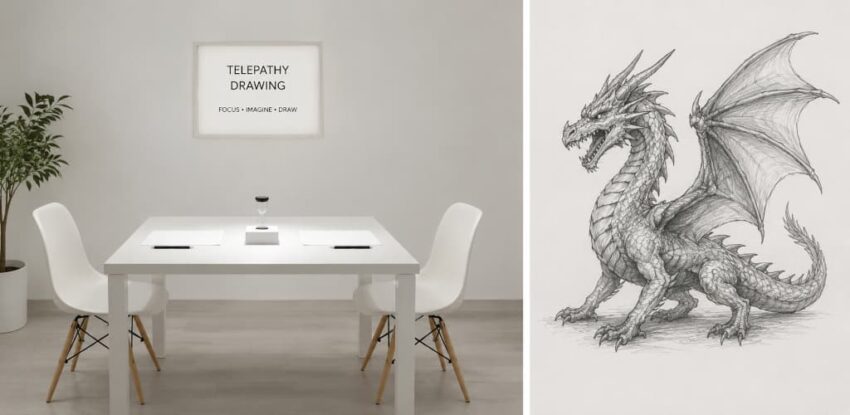
Telepathic Art is a form of art created by using telepathic powers or techniques telepathic in nature. It combines concepts of extrasensory perception (ESP) with visual art. It can include telepathic drawings, performances, or conceptual artwork that exist primarily as thought.
One artist who has explored these ideas is Marina Abramović. The Serbian-American artist and one of the best-known figures in performance art believes that “there is so much extra sense of perception that our brain can develop with training.” She says to CNN, “We can learn telepathy in four years.” Abramović is not the only one interested in the idea of telepathy training. Many people have explored this phenomenon.
Origins
In the late 19th century, when telepathy became part of popular and intellectual culture, alongside growing interest in the unconscious mind, psychoanalysis, hypnosis, spiritualism, and attempts to photograph or record thought, artists became interested in whether thoughts and emotions could somehow be made visible through artworks without using the ordinary senses.
Examples
Robert Barry’s Telepathic Piece (1969). Barry proposed transmitting a work of “thought art” telepathically to other people. The piece therefore had no painting, sculpture, or installation to view. It was his attempt to make a thought the artwork itself.
Another example is The Telepathy Drawings by Christina Ayala and Morris. Alongside their presentation in the gallery, the artists created a Telepathy Station, where visitors could sit down and make their own telepathic drawings.
Is Telepathic Communication through Art Possible?
Hypothetically, it is possible. First of all, if a telepathic signal exists, a drawing might capture it better than words, because a drawing is closer to how we experience something than language, which always simplifies, labels or leaves something out. When we look at a drawing, we can feel or read the artist’s experience, thoughts, or intention — because a drawing carries the same raw, unlabeled impression the artist perceived and transmitted.
This also means that the better you become at noticing what you perceive, the more accurately you may be able to express that experience through your art.
Why Training ESP Can Take You Further
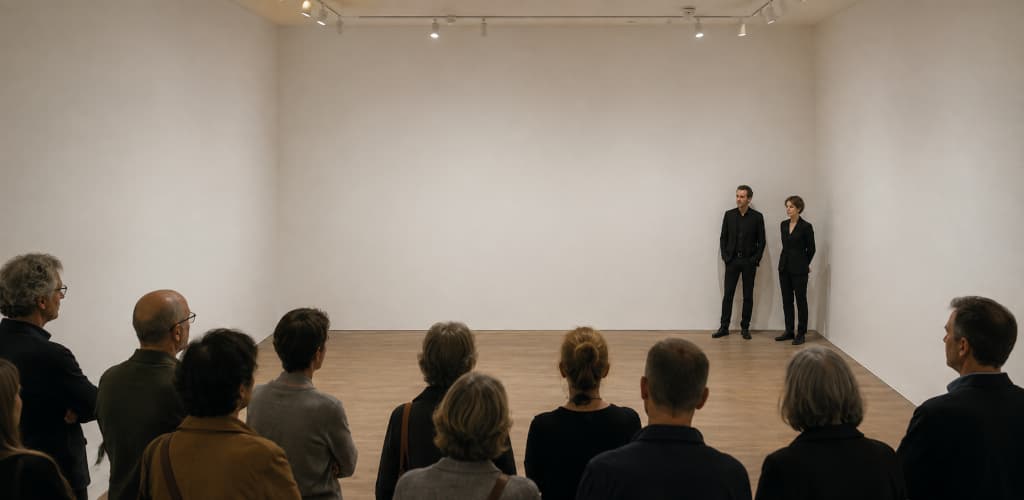
An artist who wants to become a better painter needs to train perception, not just technique. Beginners often think they need a steadier hand or better control of a pencil. But drawing also depends on how the brain processes what the eyes see.
Research by Roger Sperry and other scientists showed that the brain’s two hemispheres have different areas of specialization. Sperry’s split-brain research found that the left hemisphere was more involved in language and analytical tasks, while the right was stronger in spatial and visual processing. His work earned him the 1981 Nobel Prize in Physiology or Medicine.
Art teacher Betty Edwards put this idea into practice: she asked students to draw an upside-down image of a face. The upside-down image is difficult for the left hemisphere to recognize and “name” — and students who had previously been unable to draw faces could draw an accurate portrait in a single lesson because the analytical filter was switched off and raw perception took over.
Telepathy training isn’t the only way to sharpen perception. Art teachers offer other techniques that also improve painting skills and can make better painters.
Others Methods for Improving Your Painting Skills
One useful method is to paint from real life instead of always copying photographs. When you paint a real object, person, or landscape, you have to pay attention to light, shadows, proportions, colors, and the space between objects.
You can also practice by limiting your colors. Using only a few colors makes you focus on how different shades relate to each other and teaches you how to mix the colors you need.
Another useful exercise is quick painting. Give yourself only a few minutes to capture an object or scene. With less time to think about every detail, you learn to notice the main shapes, movement, light, and composition.
Trying different subjects and materials can also improve your skills. Paint people, animals, landscapes, and everyday objects. Experiment with brushes, palette knives, sponges, or other tools to see how they change the way you express what you perceive.
You can also study other artists. Instead of simply copying their work, look at how they use color, light, shapes, and composition. Ask yourself what your eyes notice first and why.
Most importantly, practice regularly. Even a short painting exercise can train your ability to notice details and turn what you see into visual form. Over time, this can make it easier to express an impression without relying on words.
Bottom Line
Telepathy is still a controversial concept. But isn’t much of high art like this? In our view, art should expand our understanding of the world, not narrow it.